URBAN MORPHOLOGY AND SPATIAL DYNAMICS
Investigating the structural evolution and functional complexity of historical cityscapes.


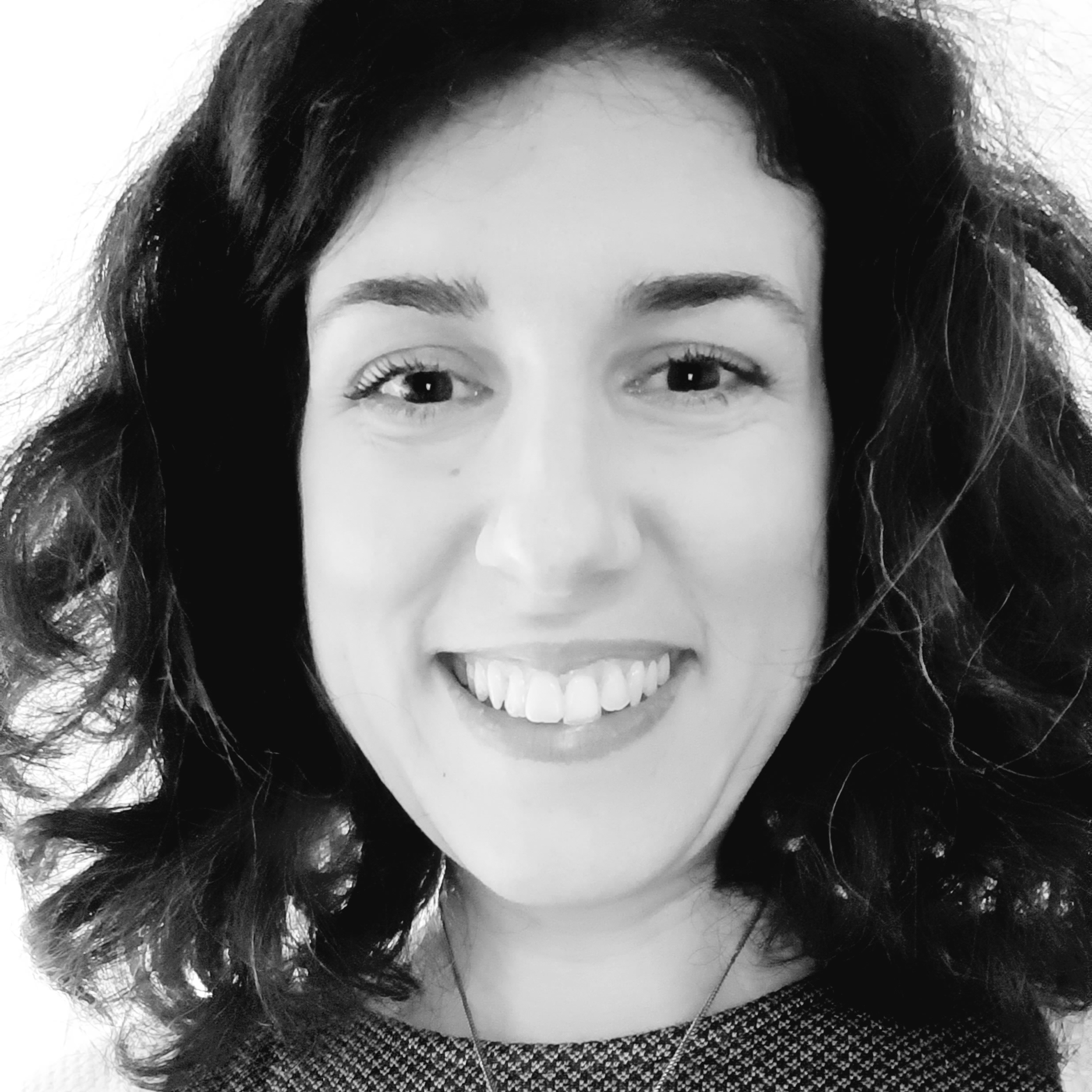



My name is Chiara Piccoli. I am an Assistant Professor at the Amsterdam Centre for Ancient Studies and Archaeology, University of Amsterdam. My research examines the historical interplay between people, their built environments, and material culture, leveraging digital methodologies such as 3D modelling and spatial mapping. My current projects investigate the implications of Artificial Intelligence for representing the past and contribute to the development of interactive 3D/4D platforms that allow scholars to run real-time simulations and visualize uncertainty, promoting methodologically transparent 3D visualizations. At the University of Amsterdam, I teach courses across the departments of archaeology, urban history, and conservation and restoration.
Investigating the structural evolution and functional complexity of historical cityscapes.
Examining buildings as microcosms of lived experience and social performance.
Exploring the impact of evolving media - from the 'Republic of Letters' to generative AI - on historical interpretation.
Developing verifiable workflows and 3D infrastructures for digital scholarship and provenance.
2026–present

University of Amsterdam,
The Netherlands
Assistant Professor at the Amsterdam Centre for Ancient Studies and Archaeology of the University of Amsterdam and UvA coordinator of the Digital Archaeology and Heritage MA specialisation.
2022–2026
University of Amsterdam,
The Netherlands
As a Research Associate and lecturer at the University of Amsterdam, I developed my own research projects, worked on 4D Research Lab projects and created new collaboration opportunities. I taught courses in the Archaeology and Heritage, Urban History and Conservation and Restoration BA and MA programmes.
2022–2023
Archol, Leiden,
The Netherlands
As a GIS specialist in the archaeological company Archol, I was the contact person for geospatial mapping and visualization.
2018–2022
University of Amsterdam,
The Netherlands
My postdoctoral research project Visualizing Amsterdam Interiors investigated how individuals created, used, displayed and experienced cultural goods in their homes during the seventeenth century. To this end, I studied building historical, archival, art historical and comparative sources to develop virtual reconstructions of a selection of domestic interiors. My case studies have been the house of Pieter de Graeff, Amsterdam patrician and VOC director, the house of Rembrandt (Het Rembrandthuis museum) and the house of the painter Gillis van Coninxloo. These 3D models served as data integration and hypothesis visualization platforms to spatially connect, manage and research the rich and heterogeneous data on this period. This project aimed to contribute to our understanding of the socio-cultural and spatial context of the production and consumption of the Amsterdam creative industries, and aided the development of a methodology to handle uncertainty and annotations in 3D visualizations.
2017–2019
Leiden University,
The Netherlands
I developed and taught courses in the Digital Archaeology MSc, was internship coordinator of the MSc track and co-organized several conferences and symposia, including the “Archaeology of the Future symposium” (National Museum of Antiquities, Leiden, 2018), the international conference “Heritage under Threat: Centre for Digital Heritage annual meeting” (Leiden, 2017) and the 19th Leiden Centre of Data Science on “Big data in archaeology” (Leiden, 2017). During this appointment I obtained the University Teaching Qualification (Basis Kwalificatie Onderwijs, BKO).
2010–2015
Leiden University,
The Netherlands
Researcher in the FP7 European project CEEDS – The Collective Experience of Empathic Data Systems. The main goal of CEEDS was to develop innovative tools to exploit implicit human responses by analyzing users’ bio-signals and non-verbal behaviours. By associating these implicit responses with different features of large datasets, CEEDS aimed to guide users’ discovery of patterns and meaning within the datasets. The project was articulated in several sub-projects, focusing on applications such as archaeology, neuroscience and retail, and on developing ad hoc technologies integrated in a main common showcase.
2018
Leiden University,
The Netherlands
Research project “Visualizing cityscapes of Classical antiquity: From early modern reconstruction drawings to digital 3D models. With a case study from the ancient town of Koroneia in Boeotia, Greece”. My thesis is published in the Archaeopress Open Archaeology Series and available Open Access here. If you would like to have a look at the CityEngine rule files that I wrote for this project, you can find them on my GitHub page.
2010
Leiden University,
The Netherlands
Graduated with 9 cum laude with thesis “The Thesaurus Antiquitatum et Historiarum Italiae (Leiden, 1704–1725) between historical research and digital dissemination”. My thesis was awarded the Tiele-Stichting thesis prize for the best thesis in the field of Book Studies in the Netherlands in 2011. This research appeared as C. Piccoli, “Publishing in the Republic of Letters: Behind the Scenes of Pieter van der Aa’s Thesaurus Antiquitatum et Historiarum Italiae (Leiden, 1704–25)”, Quaerendo 43 (2013), pp. 61–82.
2008
University of Siena,
Italy
Master’s Degree in Greek and Roman Archaeology (University of Siena, Italy). Graduated with 110/110 cum laude with thesis “Le lucerne di Thamusida (Marocco)” (oil lamps of Thamusida, Morocco). This research appeared as C. Piccoli, “Suppellettile da illuminazione”, in A. Akerraz, S. Camporeale, E. Papi (eds.), Sidi Ali ben Ahmed – Thamusida, 3. Le matériel, pp. 214–37.
2005
University of Trento,
Italy
Graduated with 110/110 cum laude with thesis “La krene del Karasis. La sorgente della fortezza tardo ellenistica in Cilicia Orientale: analisi tipologica e restituzione tridimensionale” (The krene of Karasis. The late Hellenistic fortress spring in East Cilicia: typological analysis and 3D reconstruction). During my Bachelor I spent a semester at the Aristotle University of Thessaloniki as Erasmus student.