Research news
Short updates about ongoing research projects, talks and related activities (2025 onwards).
2and3D Photography Rijksmuseum conference
C. Papadopoulos, C. Piccoli, T. van der Heijden, K. Gillikin Schoueri, "Infrastructures for 3D Heritage: Presentation, Publication, Preservation" workshop at the 2AND3D PHOTOGRAPHY international conference, Rijksmuseum, Amsterdam.
Dynamic3D at DH Benelux 2026
C. Papadopoulos, C. Schnober, K. Gillikin Schoueri, C. Piccoli, S. Schreibman, J. Garcia González & T. van der Heijden, "Dynamic3D: Interactive Narratives through 3D Simulation and Analysis", paper presented at the Digital Humanities Benelux conference 2026, Maastricht, Netherlands.
NWO Impact Explorer grant awarded
I received an NWO Explorer grant for my project “Visual (Synthetic) History and AI: Exploring the design and implementation of provenance tracking tools for AI-edited media of historical content”.
The AI-PastScapes project’s results have underscored the need to equip the public with tools to distinguish between trustworthy, evidence-based AI-generated content and manipulative content created for clickbait, political propaganda, ethnic or religious divisiveness. Existing AI-labelling techniques lack input data traceability, crucial for content derived from existing historical images. The Impact Explorer team aims to address this gap by providing practical tools to ensure such traceability. As AI-generated content proliferates, these tools will have a great societal impact by allowing the public to navigate the digital landscape with greater confidence, discernment, and trust in the authenticity of the information they encounter.
Open Science NL
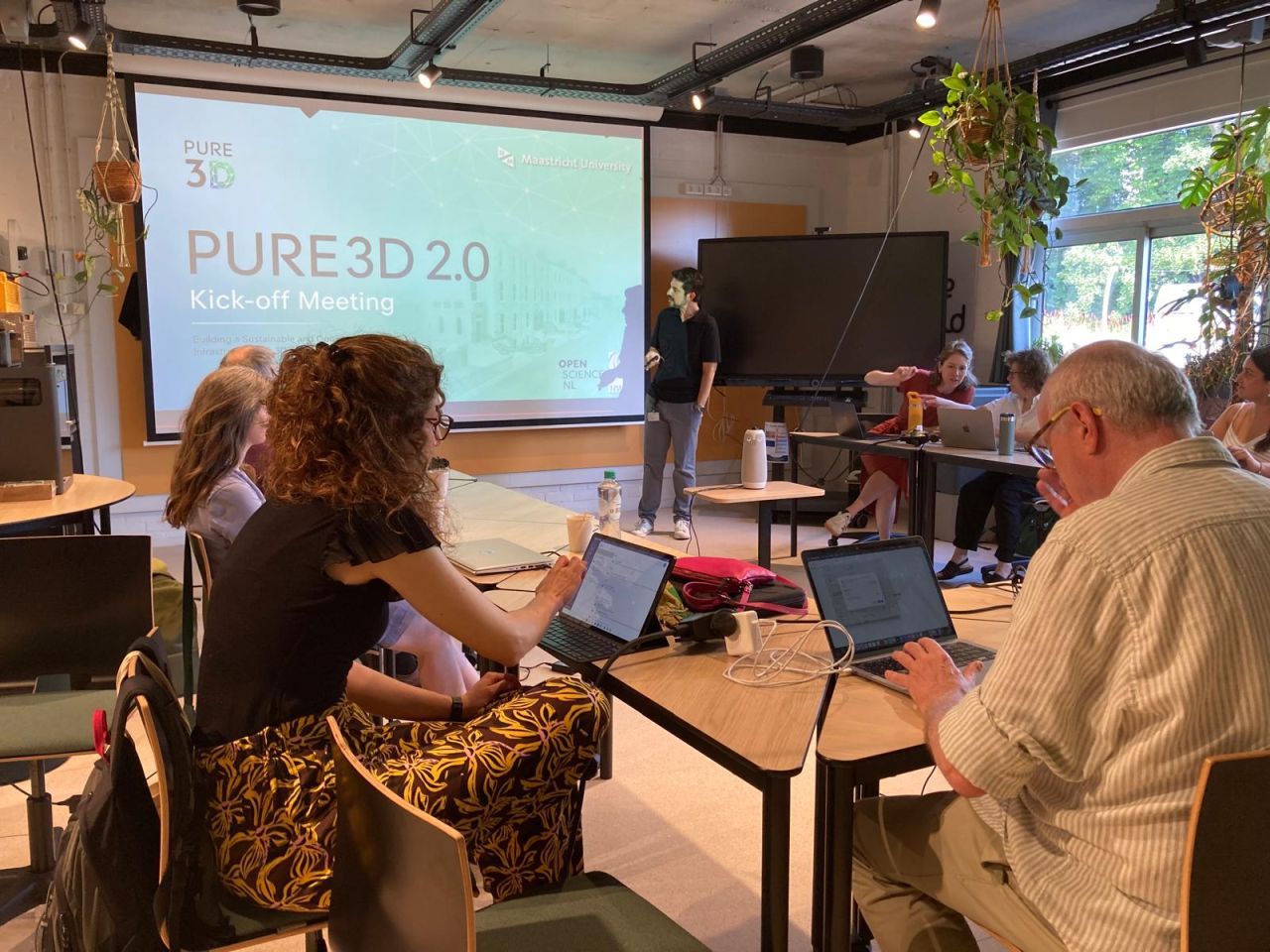
PURE3D 2.0: Building a Sustainable and Open Infrastructure for 3D Scholarship has received funding from Open Science NL - Large projects.
In this project, we are addressing critical gaps in how 3D digital heritage is preserved and shared by creating a sustainable infrastructure for interactive, web-based scholarly narratives. I am involved as co-applicant, WP3 co-lead and lead of the urban history use case.
Read moreAI and History, International Seminar, Trento
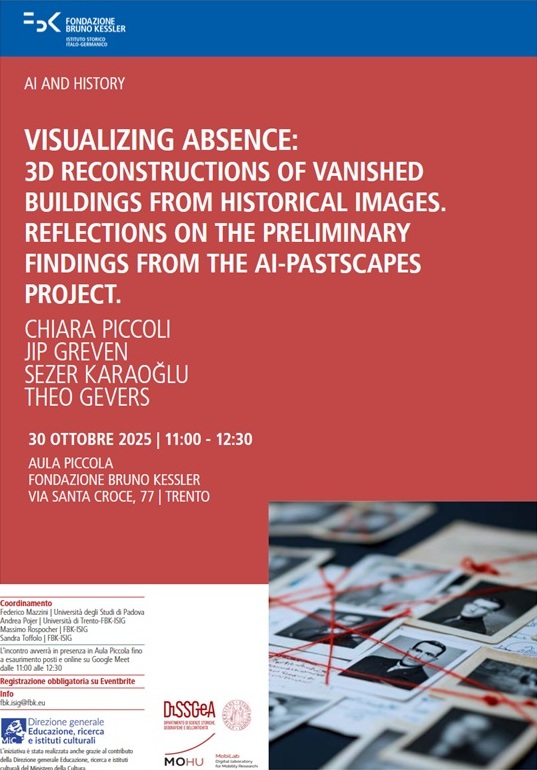
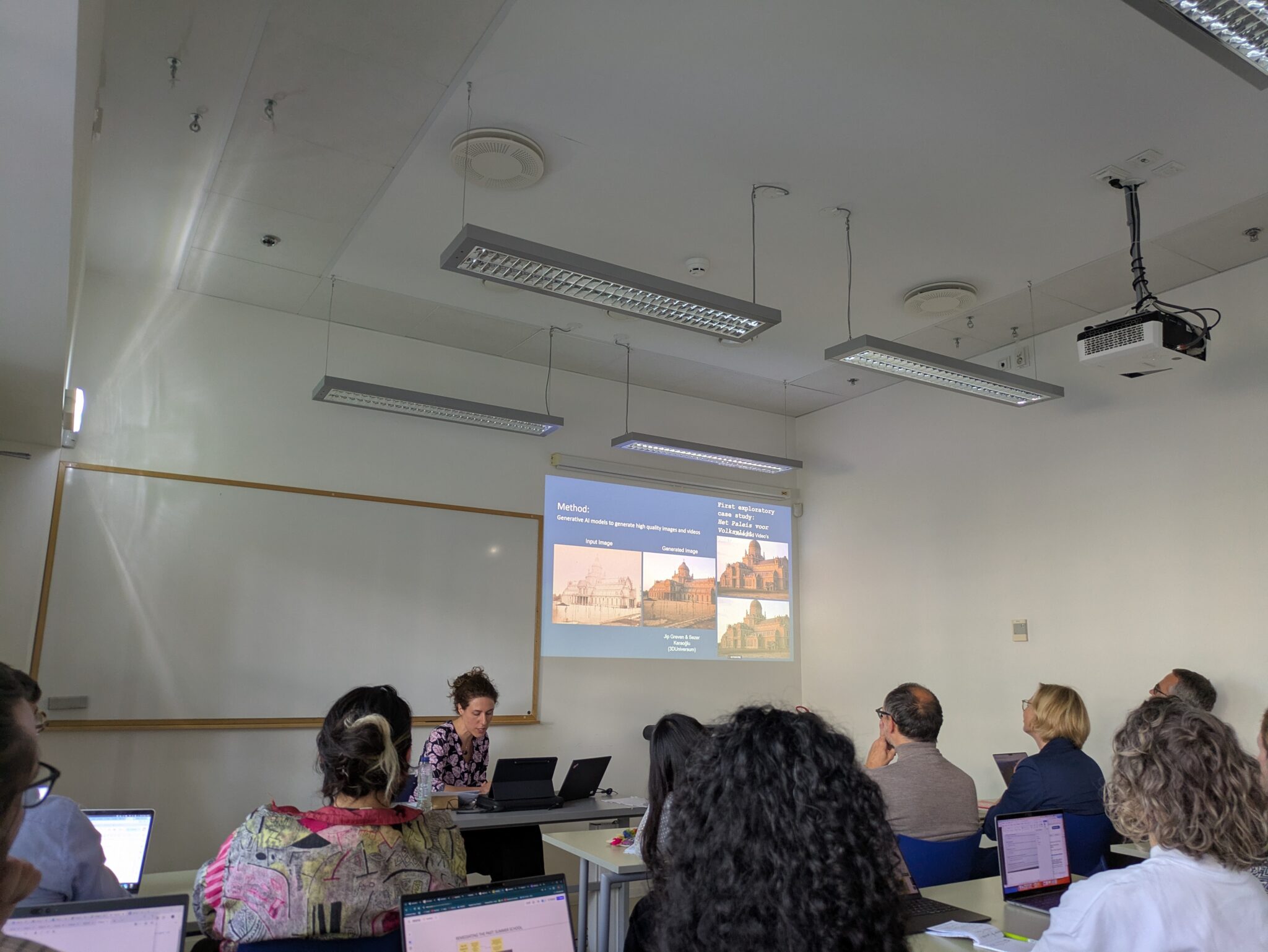
C. Piccoli, J. Greven, S. Karaoğlu and T. Gevers, “Visualizing absence: 3D reconstructions of vanished buildings from historical images”, paper presented at the international seminar series AI and History organized by FBK-ISIG (Italian-German Historical Institute), Trento.
Paradata in 3D Scholarship, Lorentz Center, Leiden
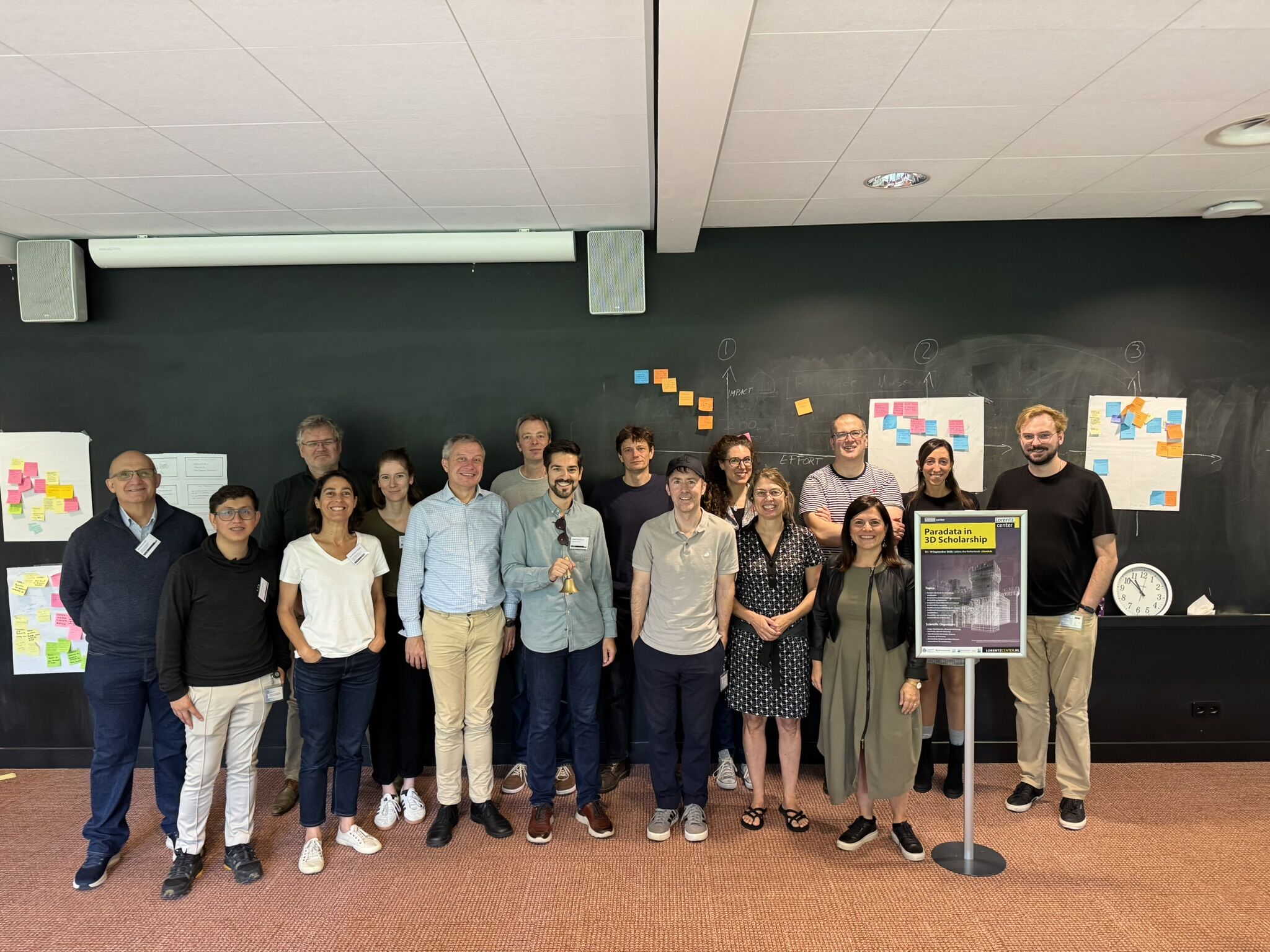
From 15–19 September, I participated in the workshop “Paradata in 3D Scholarship: Intellectual Transparency and Scholarly Argumentation in Digital Heritage”, funded by the eScience Center and Lorentz Center Innovation in Digital Heritage call and coorganized by Costas Papadopoulos (Maastricht University), Isto Huvila (Uppsala University), Trilce Navarrete (Erasmus University Rotterdam), Kira Zumkley (Victoria & Albert Museum) & Vincent Rossi (Smithsonian Institution). The event brought together experts to discuss methods for documenting decision-making processes to enhance transparency in 3D digital heritage research.
DIGHT-Net Summer School in Digital Cultural Heritage “(Re)Mediating the Past”, Tallinn University
In August 2025, I was invited to contribute to the first DIGHT-Net PhD Summer School at Tallinn University. During the program, I gave a lecture on the scholarly and ethical challenges of representing material heritage through 3D reconstructions, focusing on how these models can serve as virtual laboratories for historical argument. I also led a hands-on workshop where participants practiced object-based digital storytelling by creating 3D scholarly editions within the Voyager environment.
Preliminary results from the UvA Teaching & Learning Centre Grassroots grant
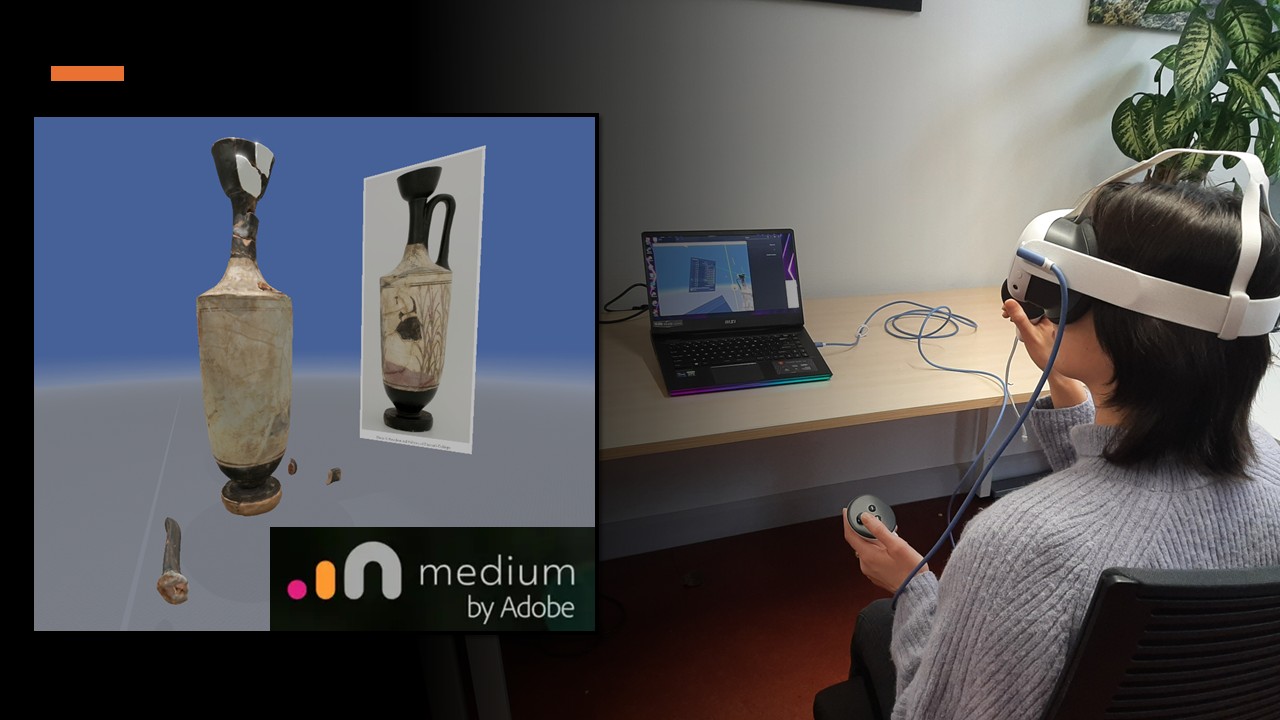
In 2024 I received funding from a grassroots grant from the Teaching & Learning Centre (TLC) of the University of Amsterdam for the project “Immersive Virtual Reality environment for digital restoration practices”.
This blogpost outlines the preliminary results of this exploratory project aimed to evaluate whether performing some restoration procedures in a Virtual Reality (VR) environment could help mitigate some of the challenges that students encounter when performing digital restorations in Blender. Archaeological materials from the Allard Pierson collection and 3D capture by the 4D Research Lab were used for this project.
Read moreDigital Humanities conference Benelux 2025
C. Papadopoulos, S. Schreibman, K. Gillikin Schoueri, T. van der Heijden, C. Piccoli, & L. Tharandt "Bridging Dimensions: Conceptualising, Developing and Exploring 3D Scholarly Editions", Panel at the Digital Humanities Conference, Amsterdam 2025.
Read more (Abstract)
Kick-off Dynamic3D project
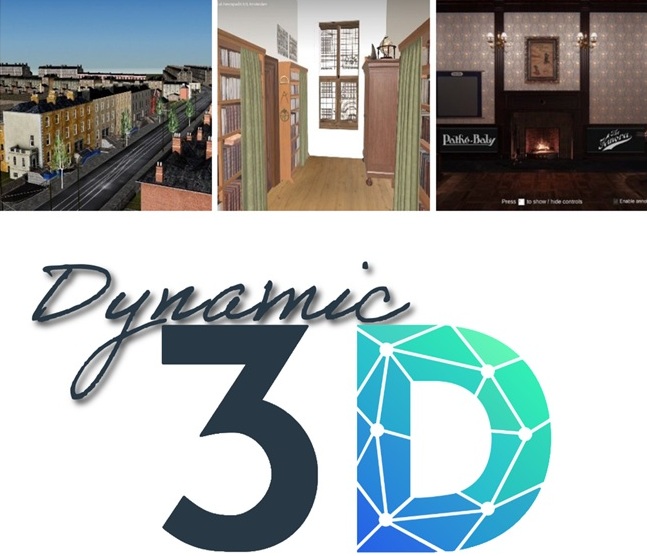
On the 19th of May 2025, we kicked off "Dynamic3D: Real-time Simulations and Analysis for 3D Scholarly Editions".
Dynamic3D seeks to transform how we interact with and understand 3D models in the humanities and social sciences. By enhancing the Smithsonian's Voyager platform, it will introduce tools for real-time simulations, exploring variables and hypotheses, and visualising uncertainties. This initiative will enable researchers to delve deeper into the dynamic aspects of cultural heritage, making 3D visualisations not just visually appealing but also analytically powerful and trustworthy. Through three distinct use cases—analysing a historic battle, exploring early modern domestic interiors, and simulating early 20th-century home cinema technologies—Dynamic3D will demonstrate its potential to unlock new interpretations and understandings of historical events and spaces. By making these tools available on an open-source basis, the project aims to benefit the global research community, fostering innovation and collaboration in 3D scholarship.
Read moreNWO Open Competition XS
I received an NWO XS grant for my project "AI-PastScapes: Artificial Intelligence assisted 3D reconstruction of historical cities".
3D historical reconstructions have gained popularity in recent years as powerful tools for research, education, and cultural preservation. In urban history, they help researchers to investigate and visualise urban continuity and change as well as past uses and experiences of public and private spaces. However, creating such 3D urban reconstructions is complex and time consuming. This project has investigated how Artificial Intelligence can be effectively used to automate the 3D reconstruction of vanished buildings starting from historical photographs and has developed a workflow which combines image enhancement, video synthesis and automatic 3D reconstruction.
Read more
EduXR Amsterdam event
"XR in cultural heritage and education: Case studies and insights from the 4D Research Lab" paper presented at eduXR Amsterdam: using eXtended Reality in higher education with Hugo Huurdeman (UvA, Timeless Future) and Jitte Waagen (UvA).
Read more (Programme)