Research

My research focuses on the relationships between people, built environments and material culture, combining archaeological, historical and digital methods.

URBAN MORPHOLOGY AND SPATIAL DYNAMICS

I investigate the structural evolution of historical cities through the integration of archaeological, archival, and spatial datasets. My research explores how digital tools can facilitate a deeper understanding of urban formation and functionality.

By creating data-driven 3D representations, I aim to foster better knowledge-sharing between historical research and contemporary urban contexts, supporting more effective heritage-informed approaches to urban development and public participation.
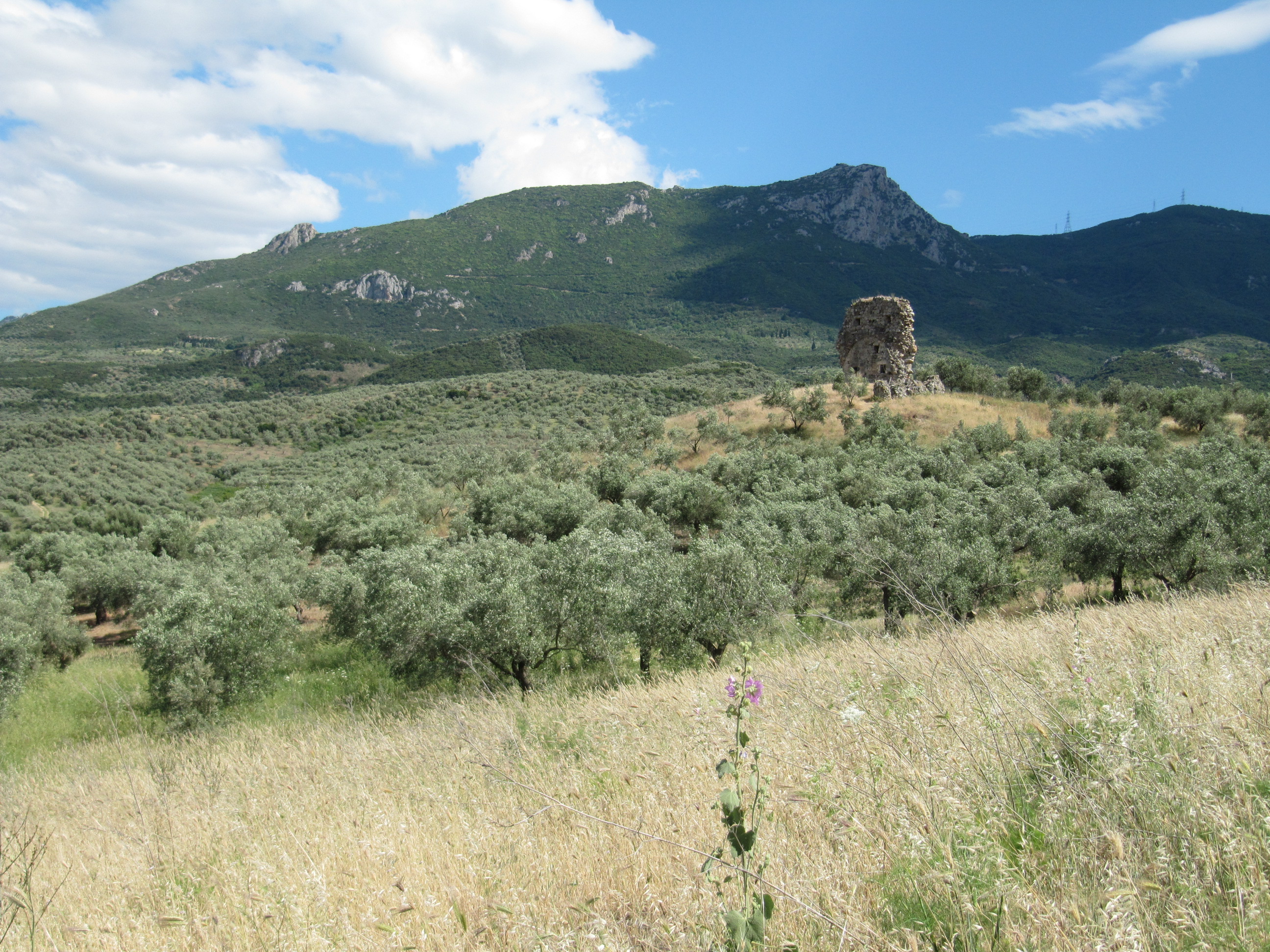
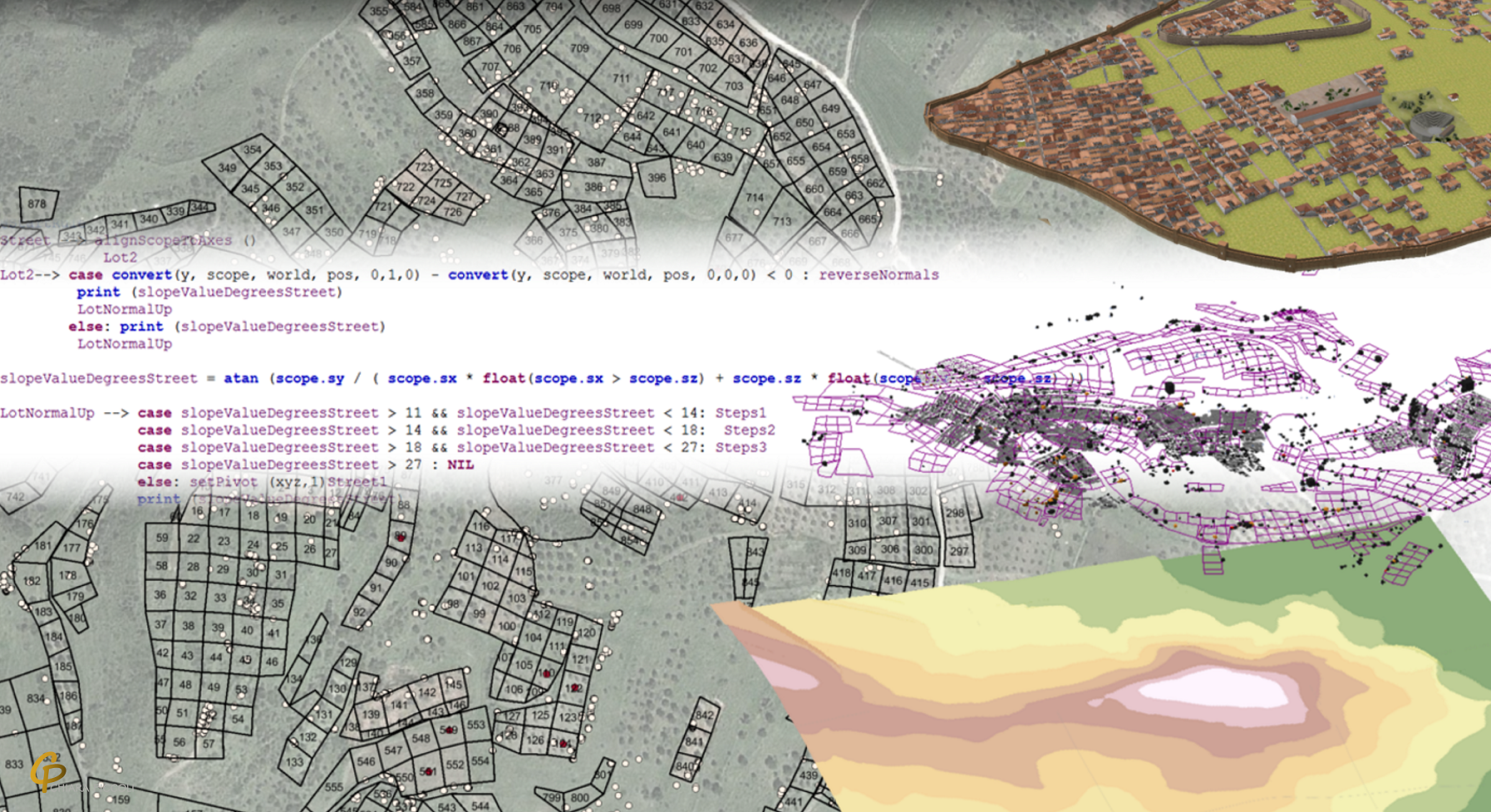
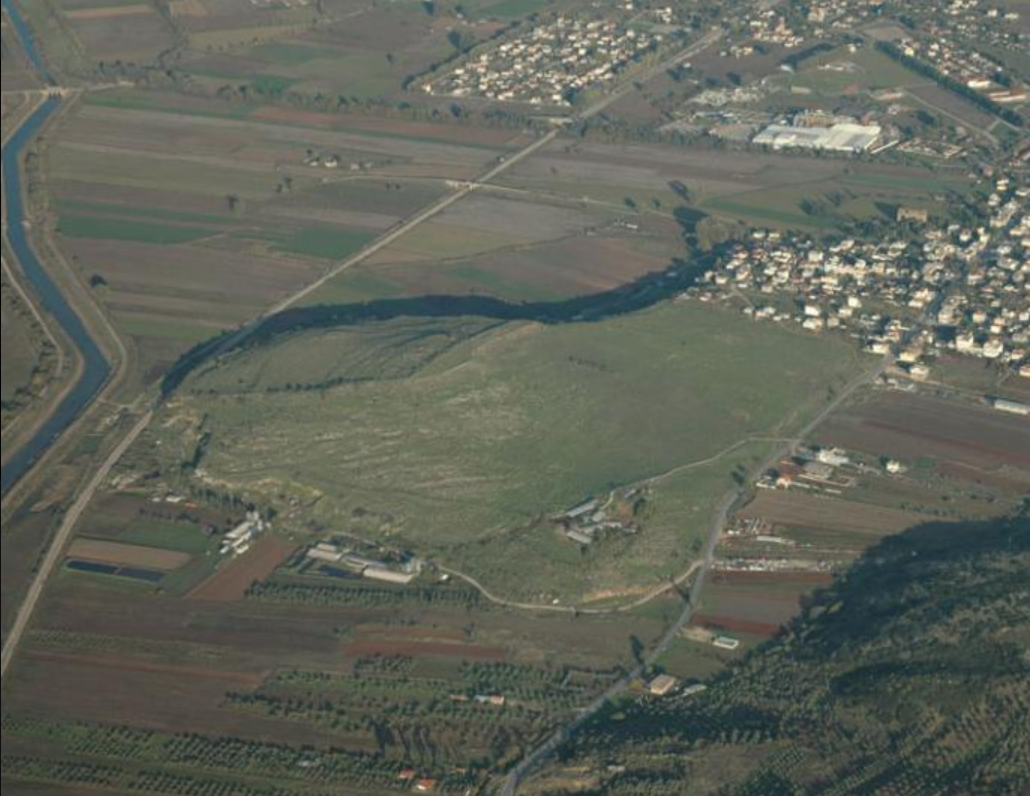
The multi-period urban site of Koroneia, Boeotia

The multi-period urban site of Koroneia, Boeotia

The multi-period urban site of Koroneia, Boeotia is a key case study for analysing long-term urban development in a rural setting.

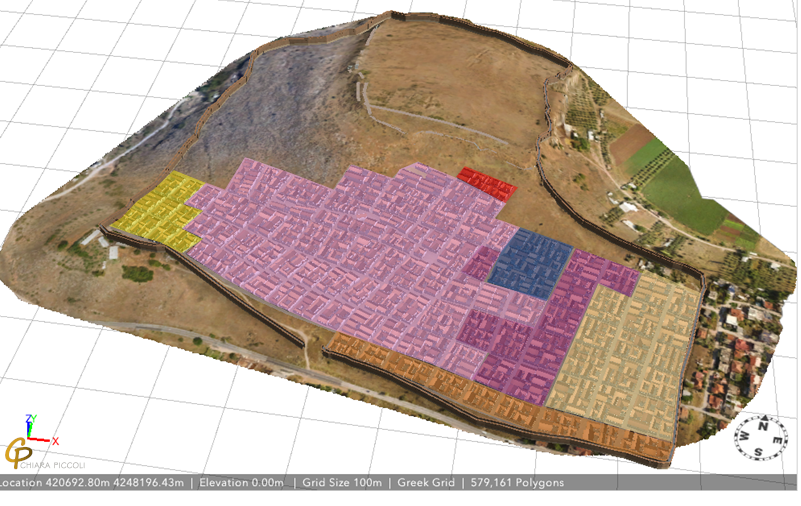
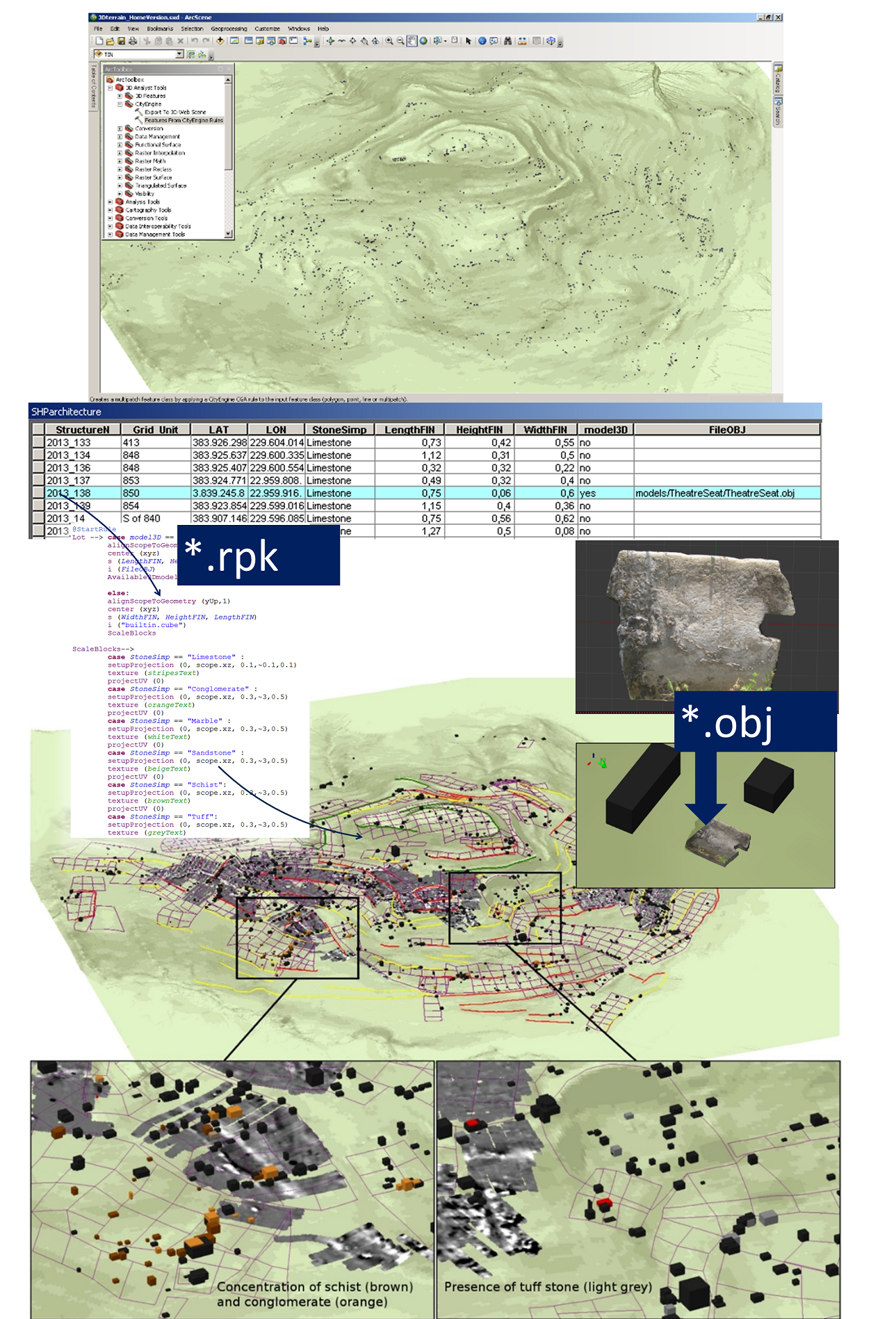
Overlay of terrain model, survey data and 3D reconstruction of Koroneia

Overlay of the terrain model, urban survey data and 3D reconstruction of Koroneia with a portion of the CityEngine rule file used to generate the 3D city model (read more in Piccoli 2018).

A screencast of the CityEngine workspace shows how alternative hypotheses about Koroneia’s distribution of houses can be created by changing the initial slope used as input value.

You can view provisional 3D reconstructions of Koroneia’s urban extent here and access the rule files of this project on GitHub.

Ancient Haliartos, Boeotia

Ancient Haliartos, Boeotia

Provisional 3D reconstruction of Haliartos with color-coded uncertainty

Provisional 3D reconstruction of Haliartos with color‑coded uncertainty degrees, based on survey data from the Haliartos House Project led by prof. Emeri Farinetti, University of Roma3.

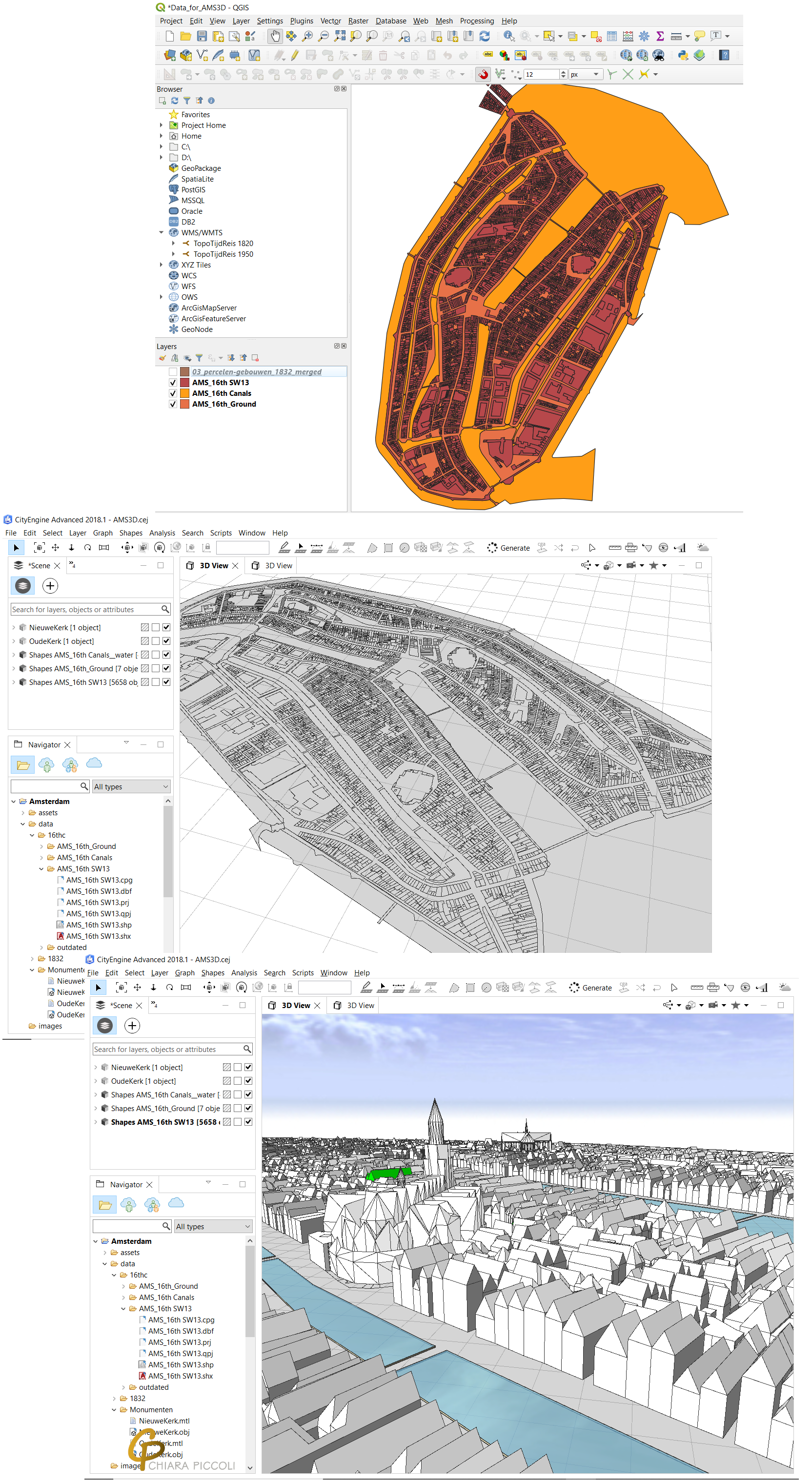
Workflow from GIS data to 3D city modelling with CityEngine

Amsterdam4D – historical Amsterdam in 3D

Pilot project Amsterdam4D: workflow from GIS data to 3D city modelling with CityEngine. Read more here.

BUILDINGS AS MICROCOSMS OF HUMAN ACTIVITY

I approach architecture not just as a collection of structural phases, but as a medium for human agency and social performance. My research has examined domestic and public architectures as microcosms of historical human activity, focusing on how the use and experience of space reflect broader shifts in power, identity, scale, and self-representation.

Through an interdisciplinary synthesis of archival, building-historical, and archaeological data, I utilize advanced 3D reconstruction to visualize lost architectural functions and investigate the lived experiences embedded within the built environment.

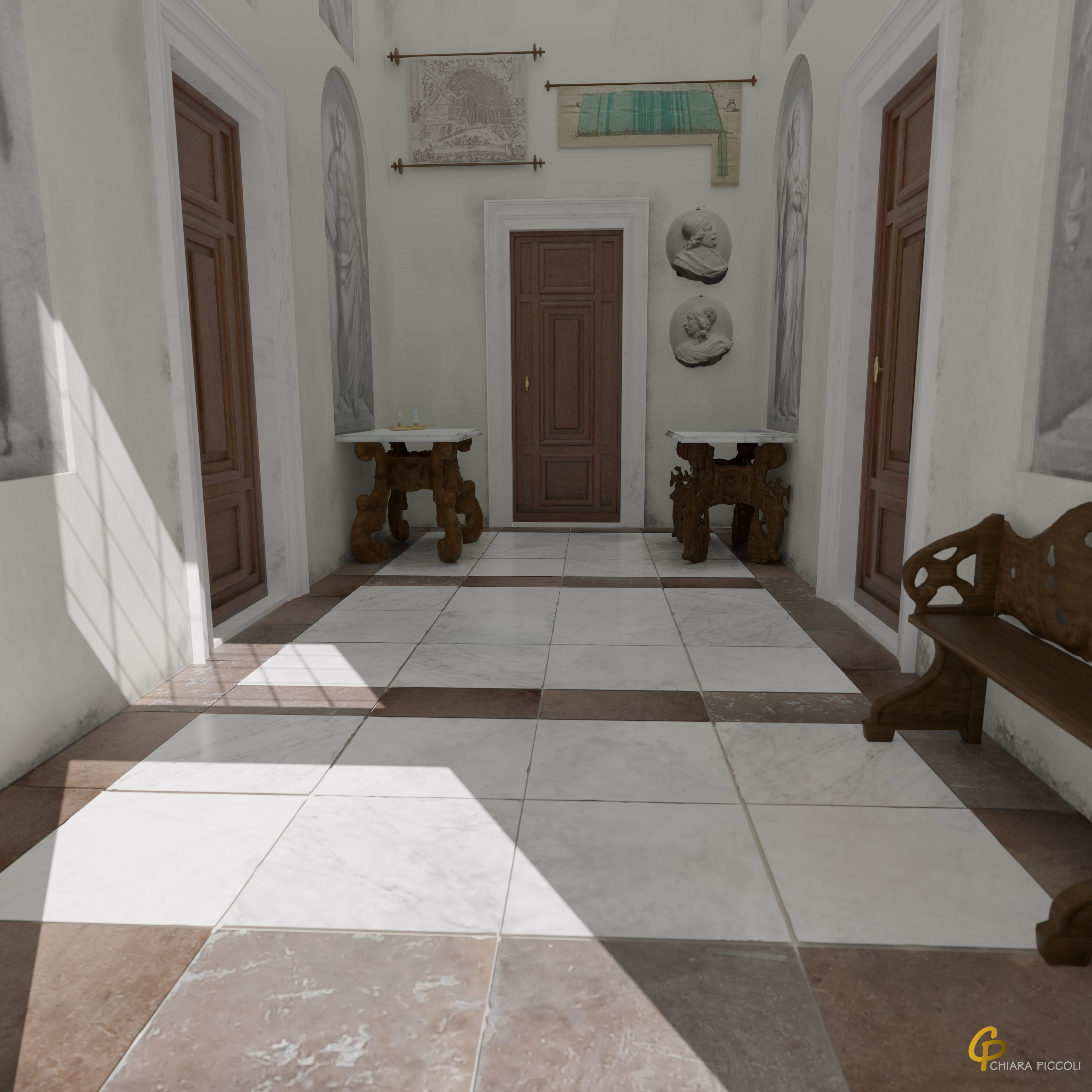
3D reconstruction of the entrance hall at Herengracht 573, Amsterdam

Houses as spaces of self-representation

This 3D reconstruction of the entrance hall in a patrician house on the Herengracht transforms a list-based inventory into a navigable 3D space, facilitating an investigation into the spatial relationship between architectural features and the placement of domestic objects (Piccoli 2023). Explore it here.

Screencast of the functionalities of the prototype Virtual Interiors webviewer which allows exploration of 3D models and contextual information, including a color-coded overlay to make the various layers of interpretation visible. Explore the 3D reconstruction of the entrance hall in the house of the Amsterdam patrician and VOC director Pieter de Graeff and his wife Jacoba Bicker at Herengracht 573 here. Read more about the viewer and its conceptualization in Huurdeman & Piccoli 2021

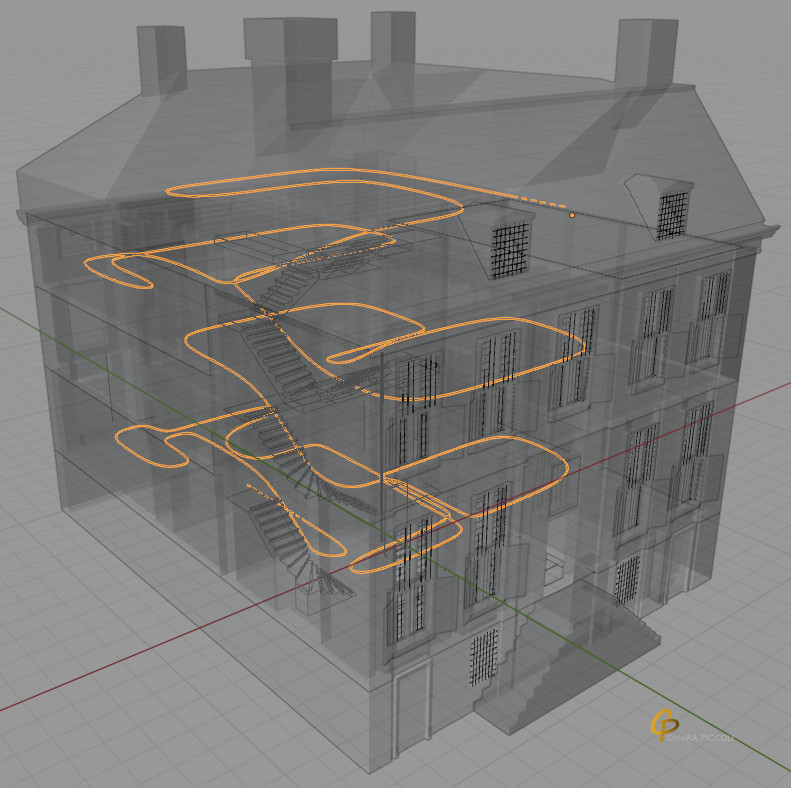
Route of notary clerks in De Graeff's house

Inventories, space and movement through the house

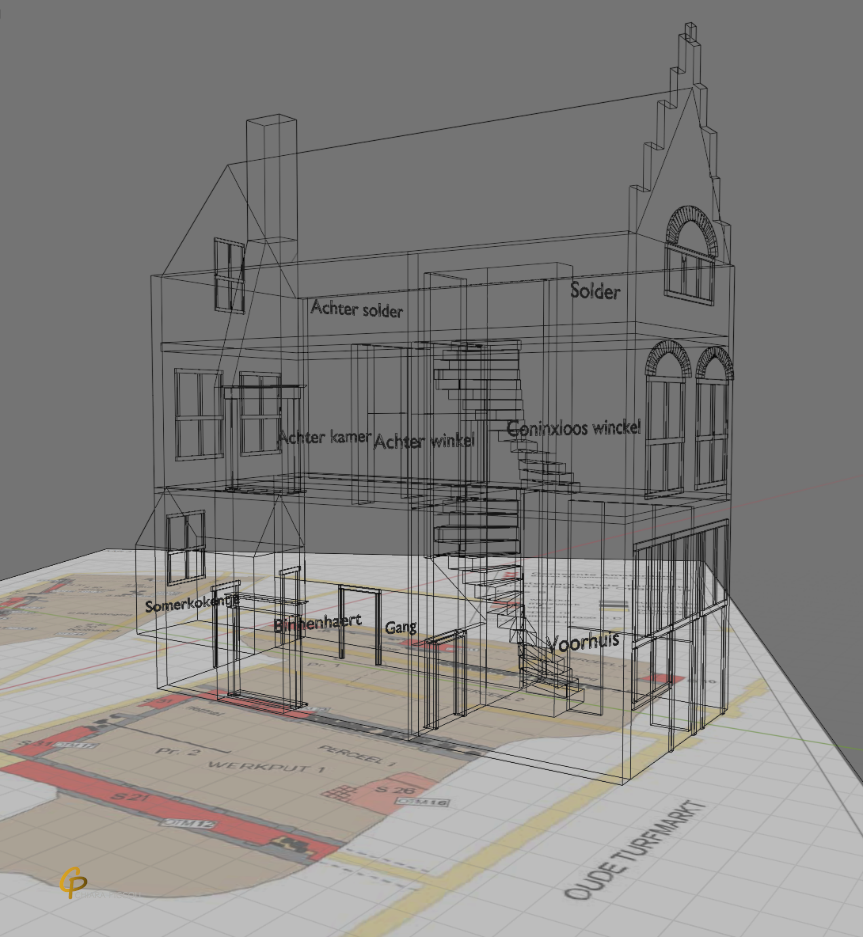
By integrating archival datasets with material remains through digital reconstruction, I investigate how historical-textual records manifest in physical space. This approach allows me to reconstruct complex spatial dynamics, such as the movement of notary clerks within the De Graeff house (top) or the room arrangement of the Coninxloo residence based on archaeological and archival evidence (bottom). Read more in these blogposts 1 and 2.

3D reconstruction of Gillis van Coninxloo's house at the Oude Turfmarkt
Het Rembrandthuis museum building

Het Rembrandthuis

Coming soon: analysis of the building historical phases of the house where Rembrandt lived in Amsterdam, currently Het Rembrandthuis museum (with G. van Tussenbroek).

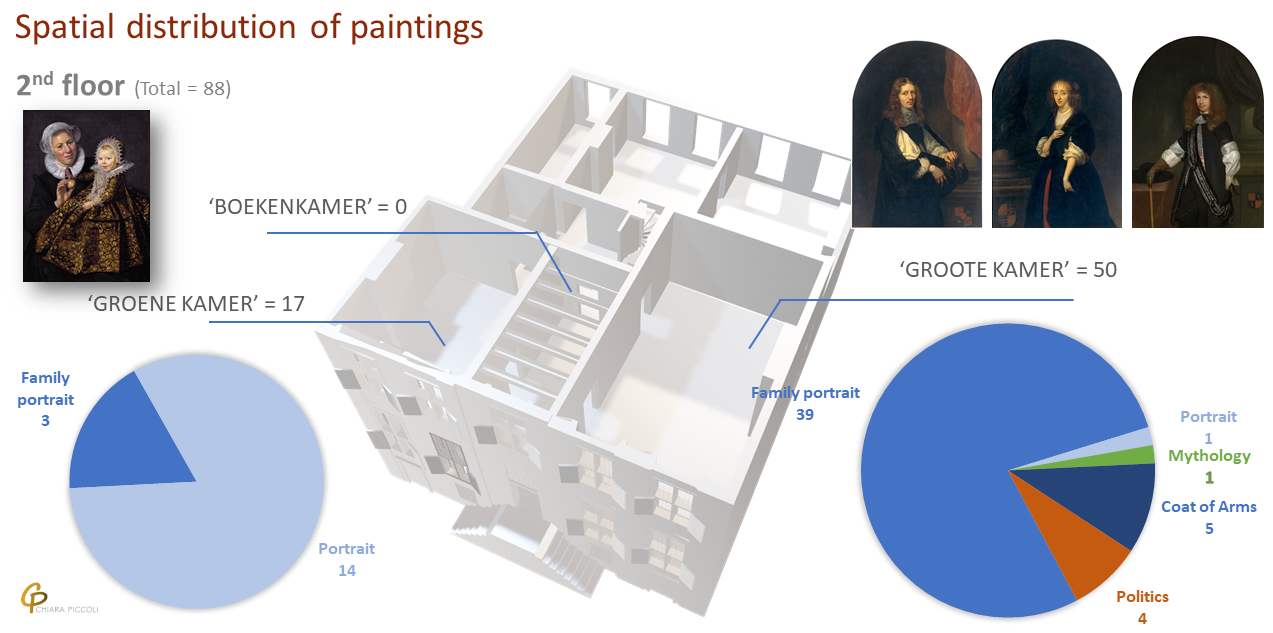
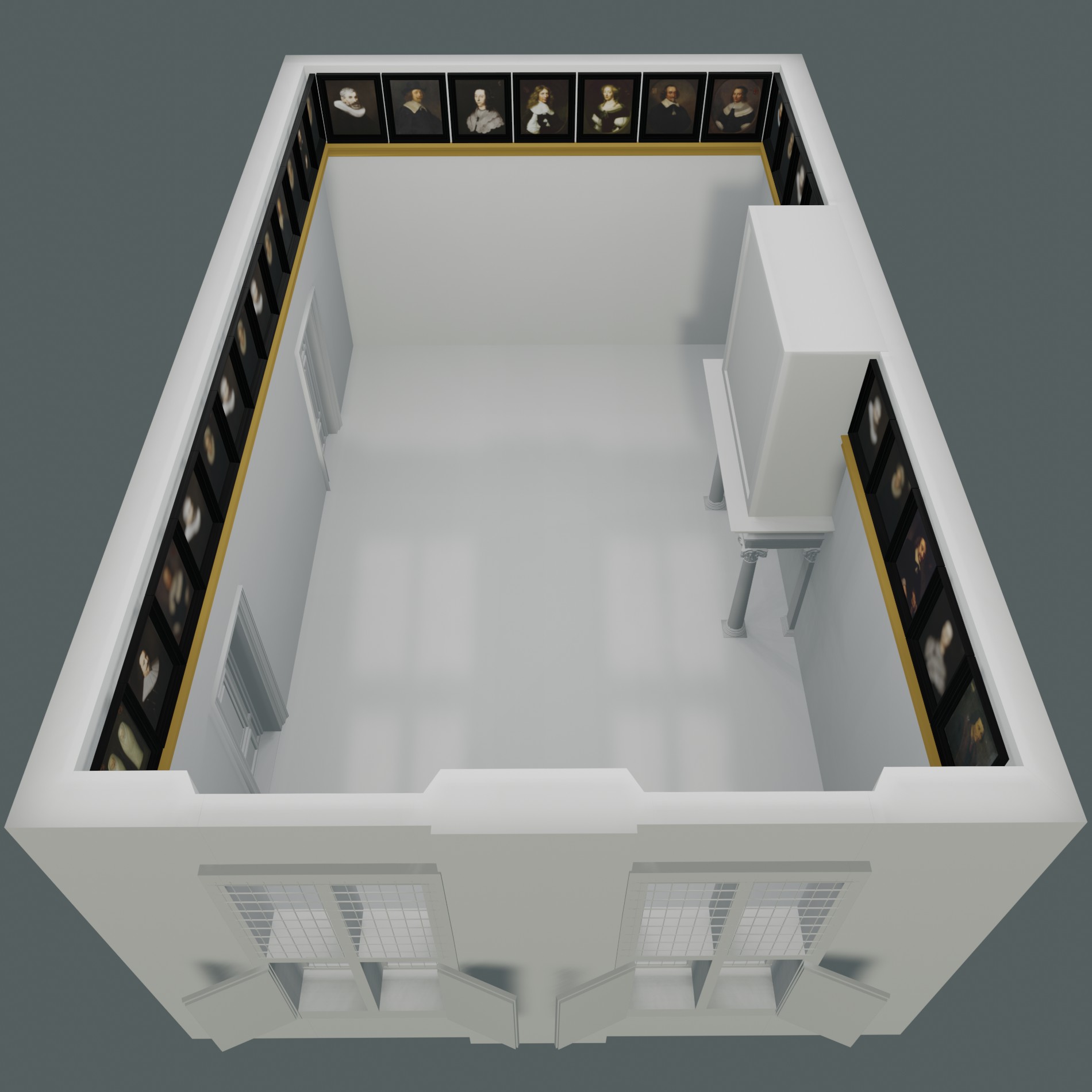
Schematic 3D reconstruction mapping paintings in De Graeff's house

Painting collection in domestic context

A 3D reconstruction of the house on the Herengracht allows the spatial mapping of a household painting collection in its original domestic context to analyse their symbolic and emotional values (discussed in Li and Piccoli 2024).

Line-up of family portraits
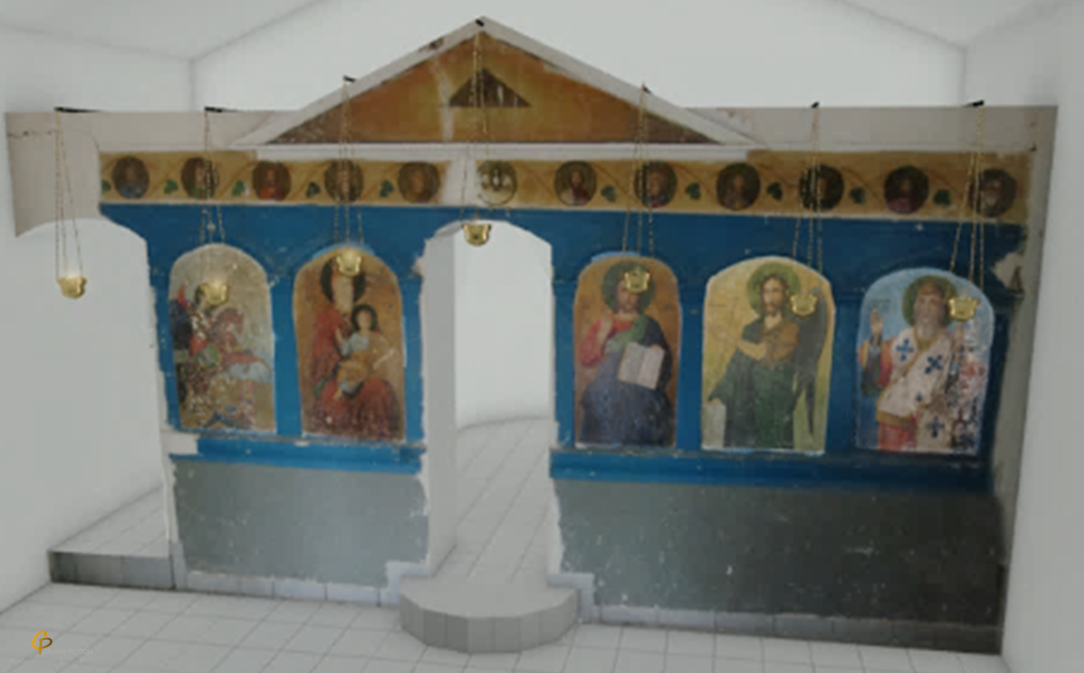
Interior of Byzantine church of Agios Dimitrios

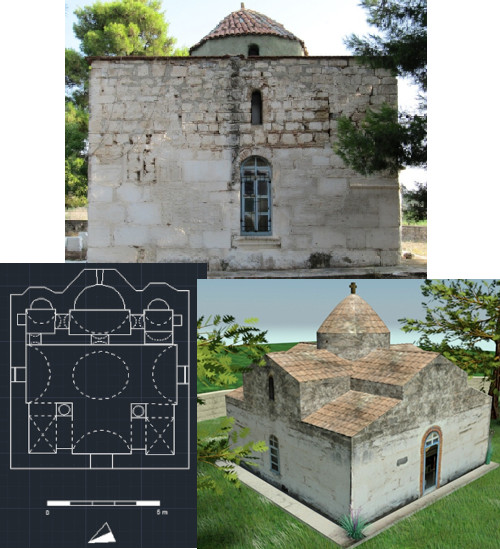
Survey and digital 3D reconstruction of Byzantine churches in Boeotia

Rendering of the interior of the Byzantine church of Agios Dimitrios and analysis and 3D reconstruction of the building historical phases of the church of Agios Thomas, Boeotia (commissioned by Dr. A. Vionis, University of Cyprus, 2010).

Analysis of building phases of the church of Agios Thomas
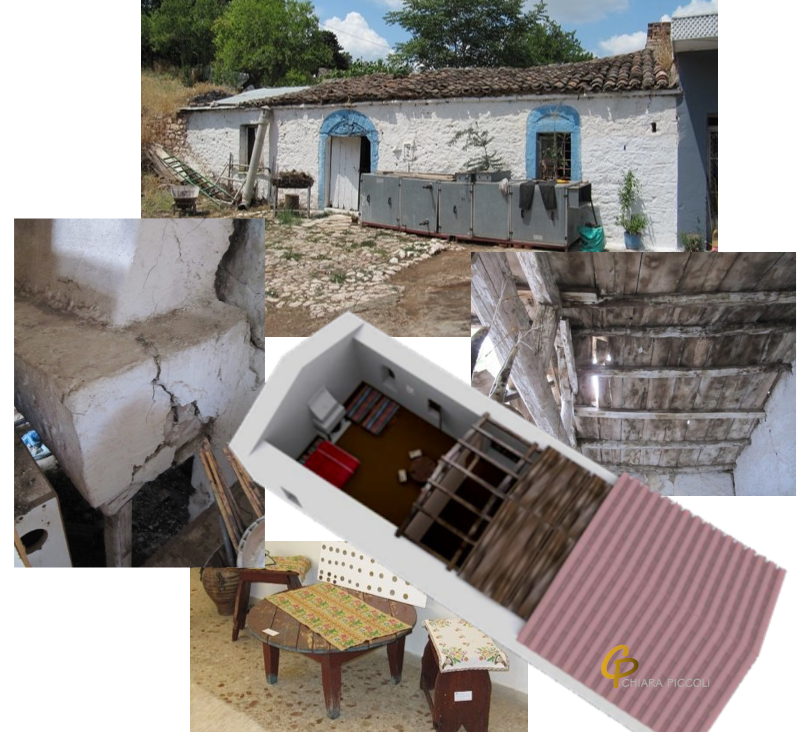
Vernacular houses in Boeotia

Vernacular houses and Franskish towers in Boeotia

Survey, digital recording and 3D reconstructing of disappearing vernacular houses in the Mazi area and the Frankish tower of Haliartos in Boeotia (see Piccoli 2011 and Piccoli & Vionis 2011).

3D reconstruction of the Frankish tower at Haliartos
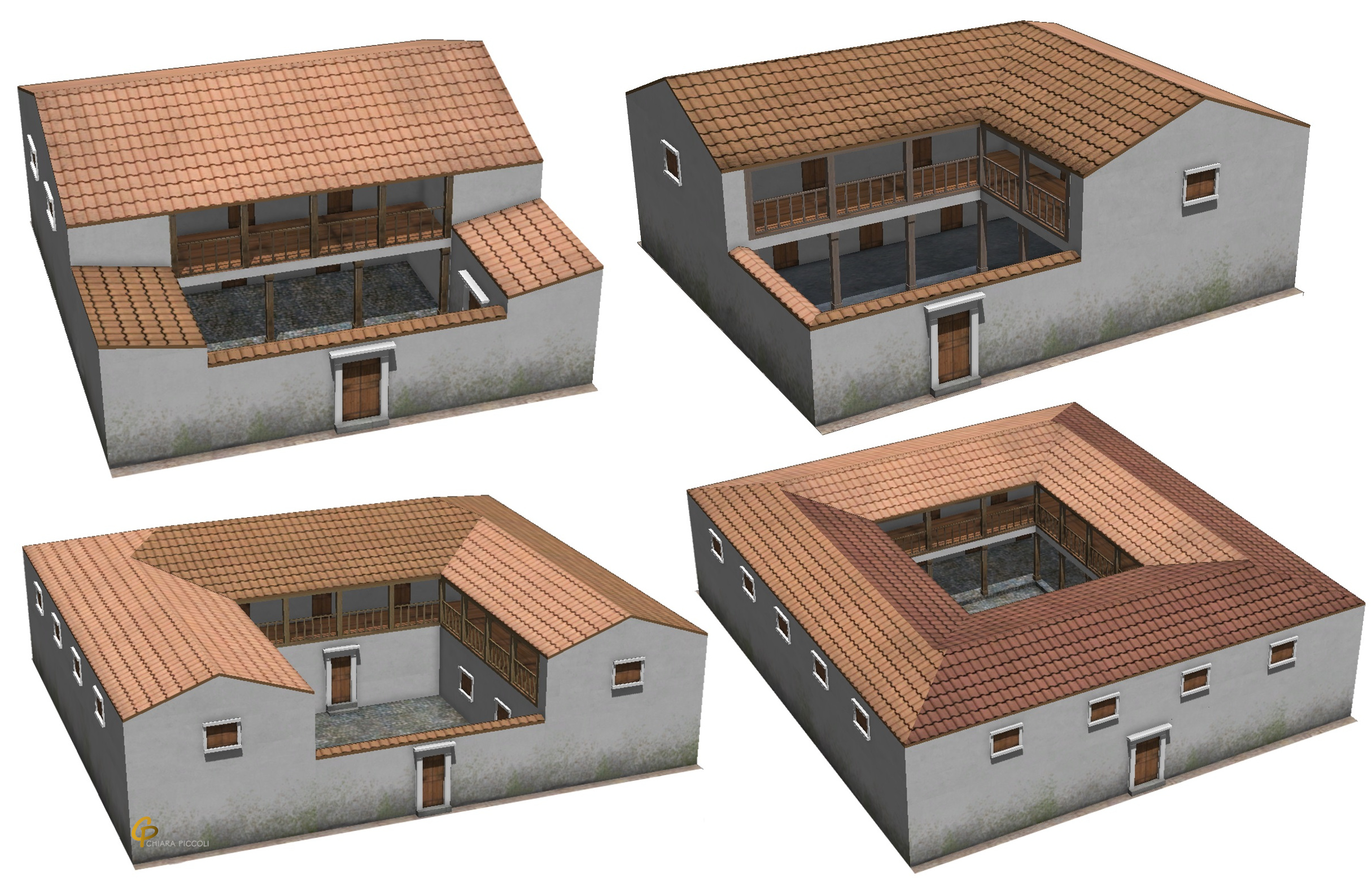
Domestic and commercial space, Lemnos 2005

Reconstructing private architecture in the Mediterranean

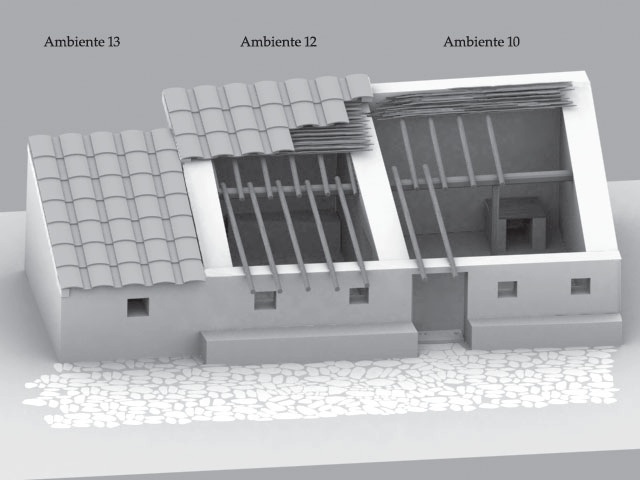
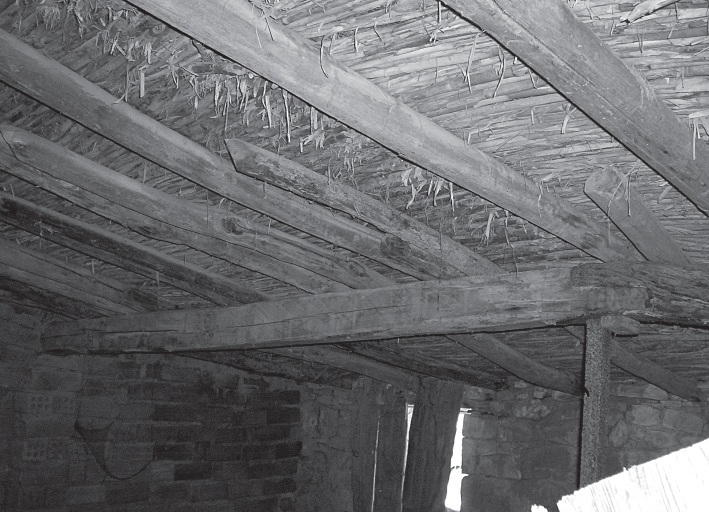
This research focused on the reconstruction of fragmented architectural remains of a late antique domestic-commercial unit through the integration of excavation data and comparative vernacular architecture. By using contemporary local building traditions – such as analyzing roof pitch in relation to regional climate – to inform structural hypotheses, this project demonstrates how ethnographically-informed modeling can bridge gaps in the archaeological record while maintaining strict empirical rigor. This research appeared in E. Greco, E. Papi, Hephaestia 2000-2006. Ricerche e scavi della Scuola Archeologica Italiana di Atene in collaborazione con il Dipartimento di Archeologia e Storia delle Arti di Siena. Atti del Seminario (Siena, Certosa di Pontignano, 28-29.05.2007) (TEKMERIA 6), Paestum-Atene 2008, chapter 4.7, p. 243-246.

Comparison from vernacular architecture Aghios Aléxandros, Lemnos

VISUAL EPISTEMOLOGY & (DIGITAL) MEDIA

Building on my foundation in Book and Digital Media Studies, my research explores how knowledge is transmitted through evolving media landscapes, from the early modern 'Republic of Letters' to the current era of synthetic images. In an age characterized by the proliferation of AI-generated visuals, I investigate the stability of the "historical image".

My work critically examines the transition from printed archives to digital simulations, focusing on the challenges of provenance, authenticity, and the potential for AI fabrication to destabilize our understanding of historical evidence. I aim to develop frameworks for verifying the integrity of digital historical narratives in an increasingly mediated world.

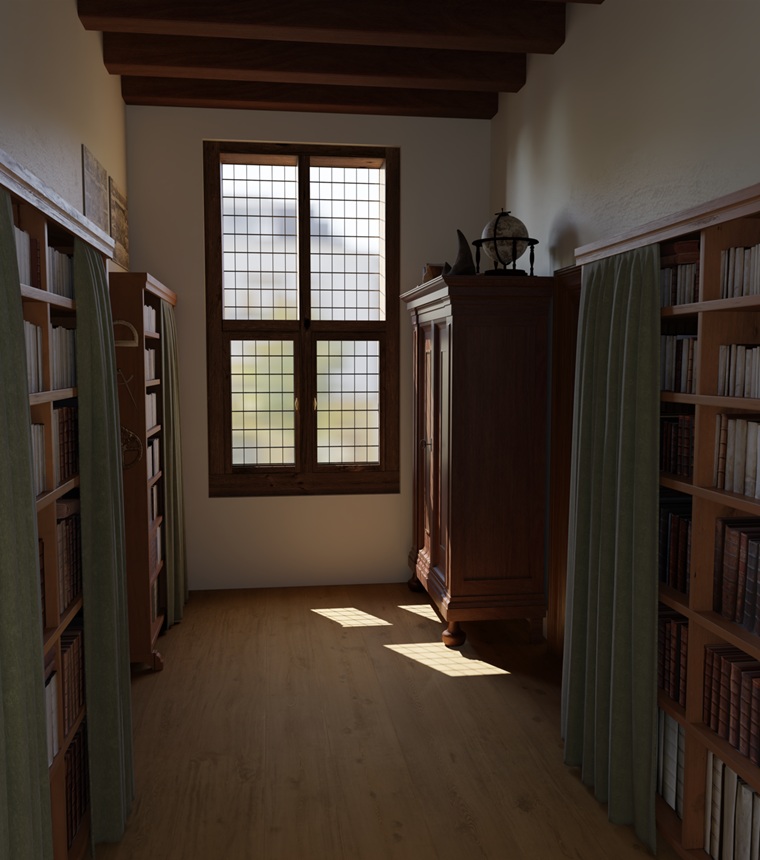
3D reconstruction hypothesis of De Graeff's home library

An early modern private library: Spatializing generational knowledge

A digital reconstruction of a lost seventeenth-century home library, treating the space as a living archive of a multi-generational book collection. This work bridges archival biography with volumetric 3D modelling and is detailed in my monograph Pieter de Graeff (1638–1707) and his treffelyke bibliotheek (Brill, 2025).

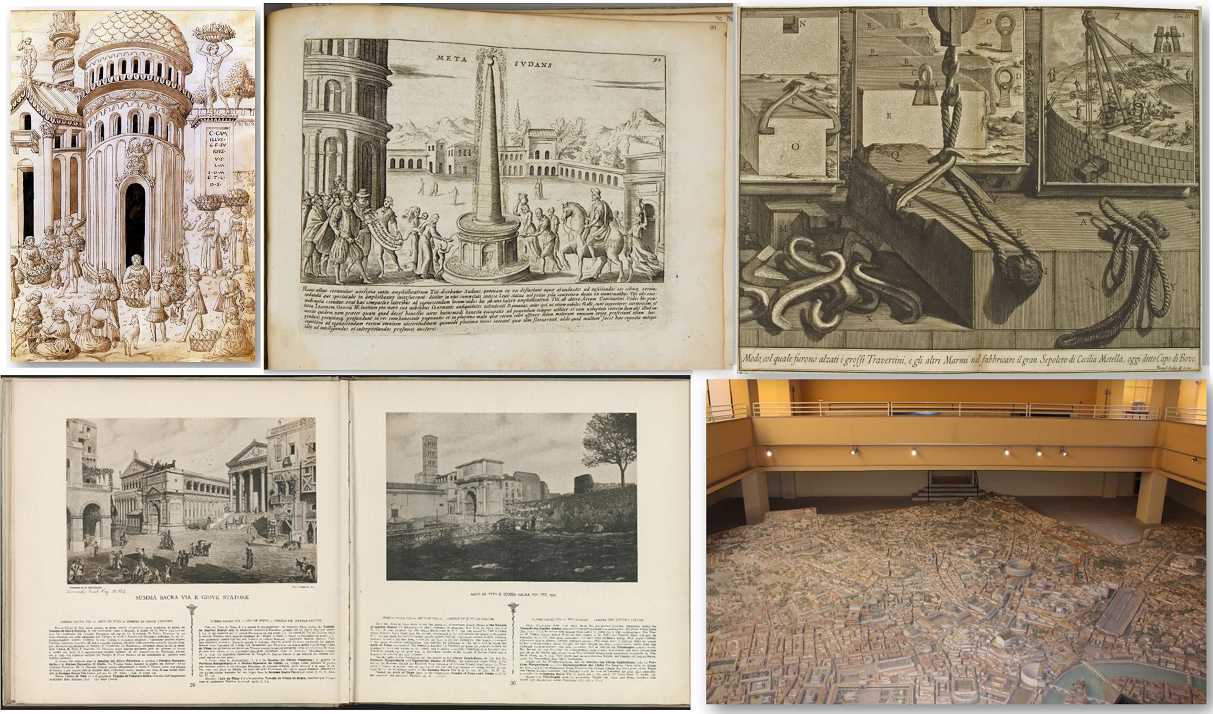
Visual reconstructions of classical ruins from early modern to modern times

Visualizing antiquity: Tracing interpretative traditions in architectural reconstruction

A study of the visual reconstruction of classical ruins, spanning from the fifteenth to the twentieth century. Beyond the evolution of media and aesthetic style, this progression illustrates how each era's unique intellectual climate shaped its interpretation and visualisation of antiquity, reflecting the shifting boundaries between historical evidence and creative reconstruction. Read more in Piccoli 2018, pp. 6–48.

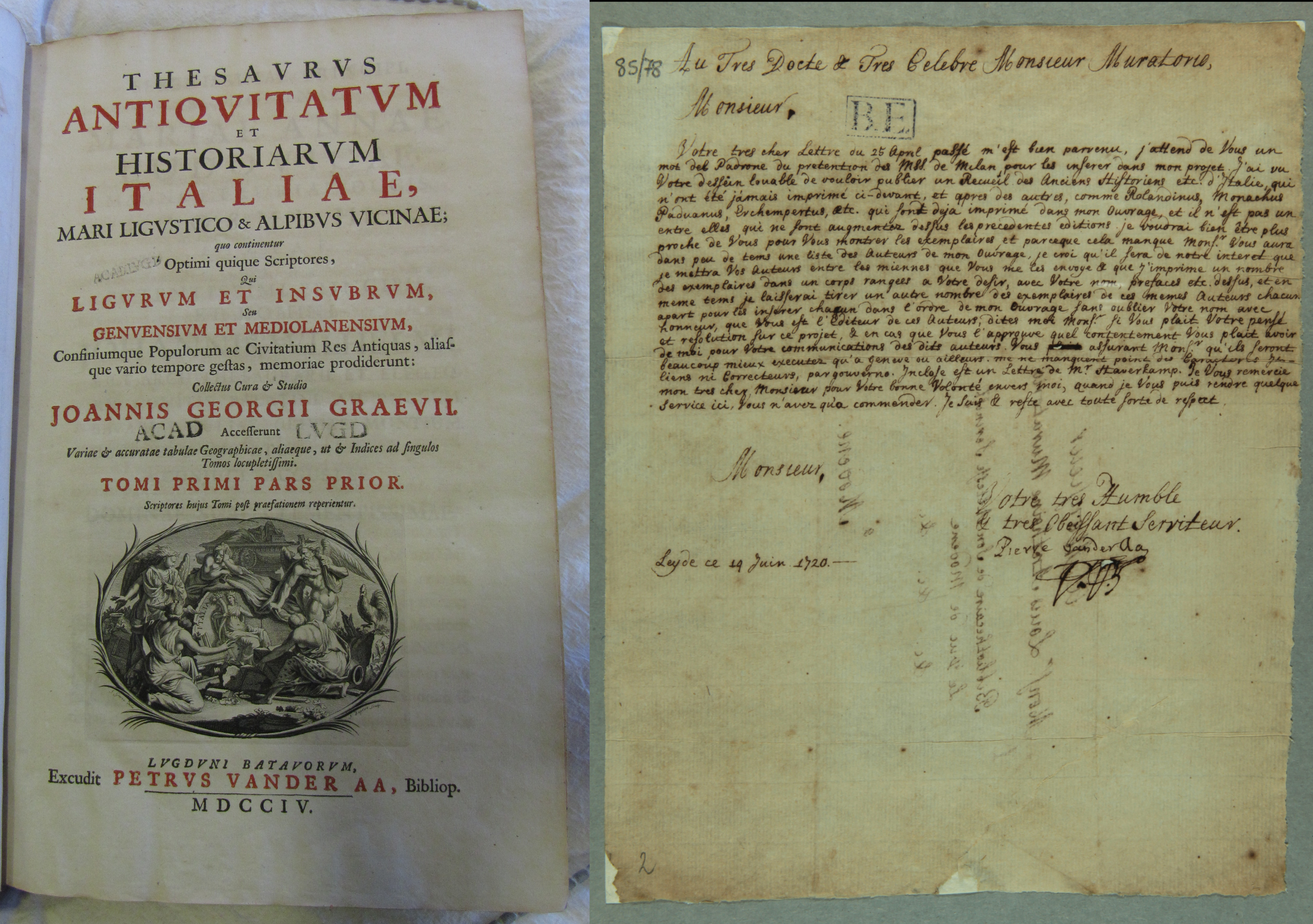
Thesaurus Antiquitatum Italiae publications

The Republic of Letters: Mapping the networks of knowledge exchange

This research examined the communicative infrastructures that facilitated the publication of the Thesaurus Antiquitatum Italiae. By analyzing the correspondence of publisher Pieter van der Aa with Italian scholars, this study uncovered the "behind-the-scenes" dynamics of early modern scholarly networks and the collaborative processes required to produce large-scale historical works. Read more in Piccoli 2013.

COMPUTATIONAL METHODOLOGIES & 3D PUBLISHING

My research is underpinned by a toolkit of computational methods designed to integrate multi-layered, heterogeneous datasets. Instead of treating digital tools only as visualization aids, I treat them as analytical instruments capable of testing complex historical hypotheses. My expertise spans the spectrum of spatial informatics: from procedural 3D modeling (Esri CityEngine) and structural reconstruction (Blender/AutoCAD) to GIS-based spatial analysis (QGIS/ArcGIS).

My current methodological focus is directed toward creating "verifiable" digital workflows: developing transparent, evidence-based pipelines that encompass the entire lifecycle of digital heritage, from initial data acquisition to the sustainable, open-access publication of annotated 3D models. By focusing on the intersection of 3D modeling and open-science infrastructures, I aim to ensure the scientific integrity, interoperability, and long-term preservation of digital archives in an era of widespread automated simulation.

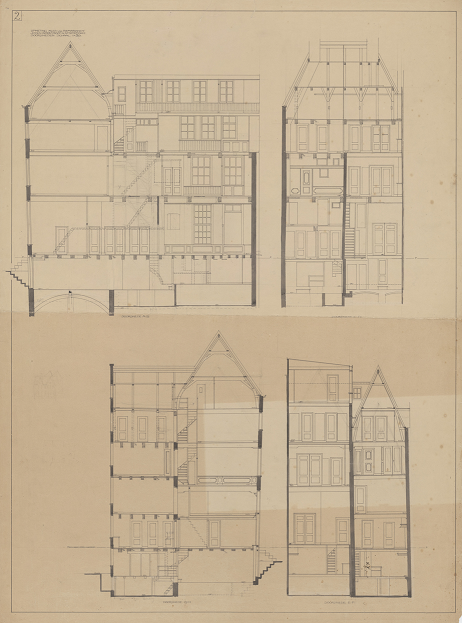
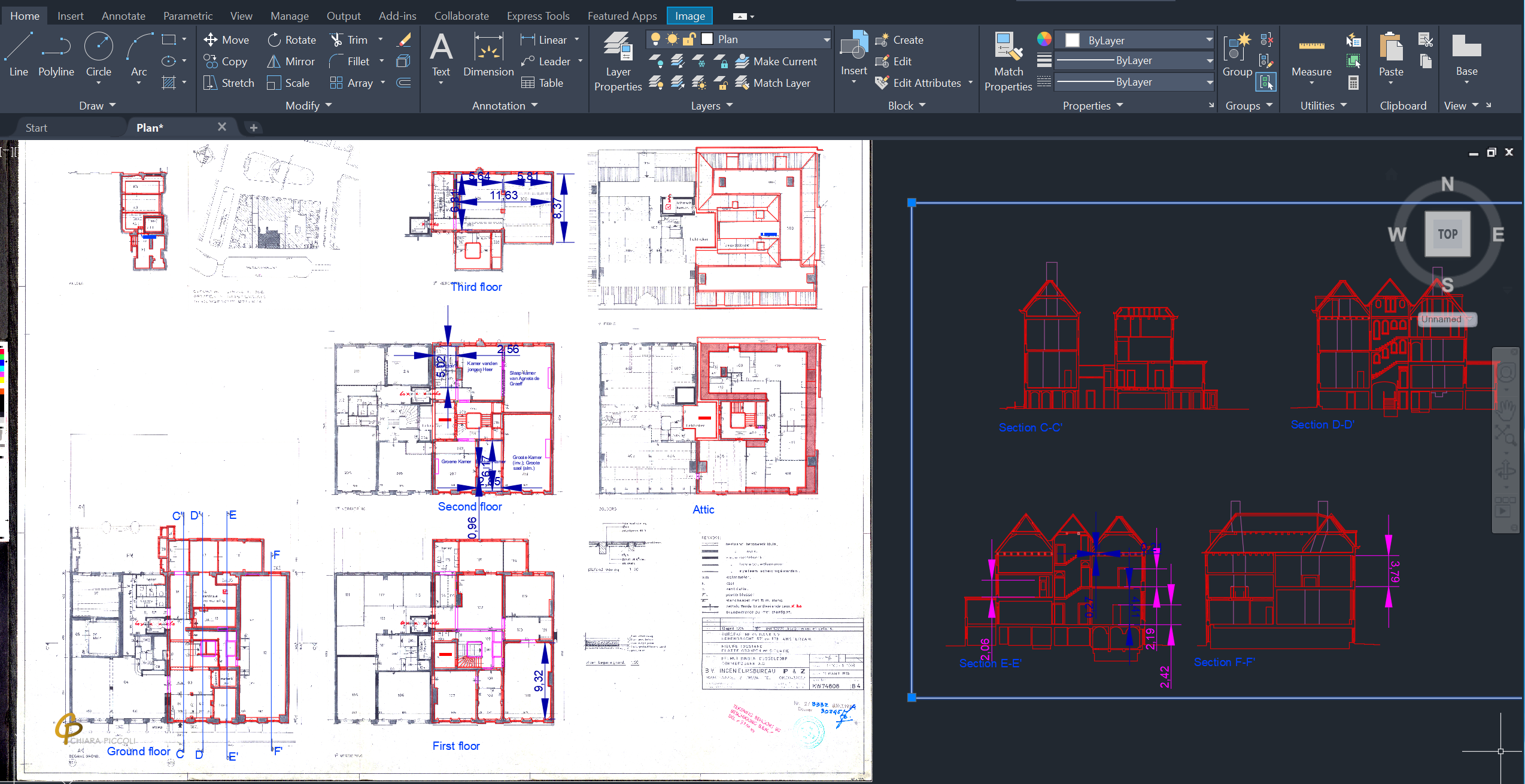
AutoCAD drawing of building plans and sections

AutoCAD building documentation

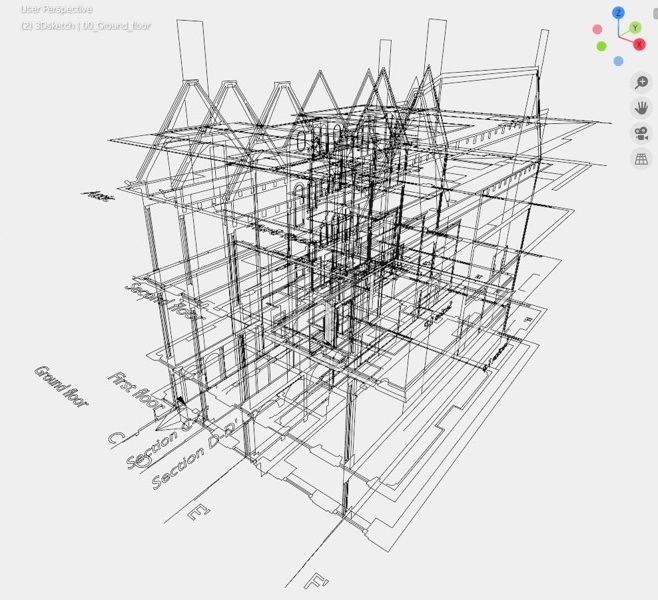
AutoCAD drawing of building plans and sections, then imported into Blender to reconstruct the building's 3D volume.

Plans and sections for the reconstruction of De Graeff's house
This 3D Scholarly Edition – peer-reviewed and published via the Pure3D infrastructure – focuses on the library of Pieter de Graeff (1638-1707), Lord of Zuid-Polsbroek, Purmerland, and Ilpendam and a director of the Dutch East India Company (VOC) in the Amsterdam chamber. It is organized in four tours offering 1) contextual insights into the library's location and appearance, 2) an exploration of the library's book collection, 3) a behind-the-scenes look at the 3D reconstruction process, and 4) a snapshot of the house's entrance hall, grand salon, and garden. You can explore it here.
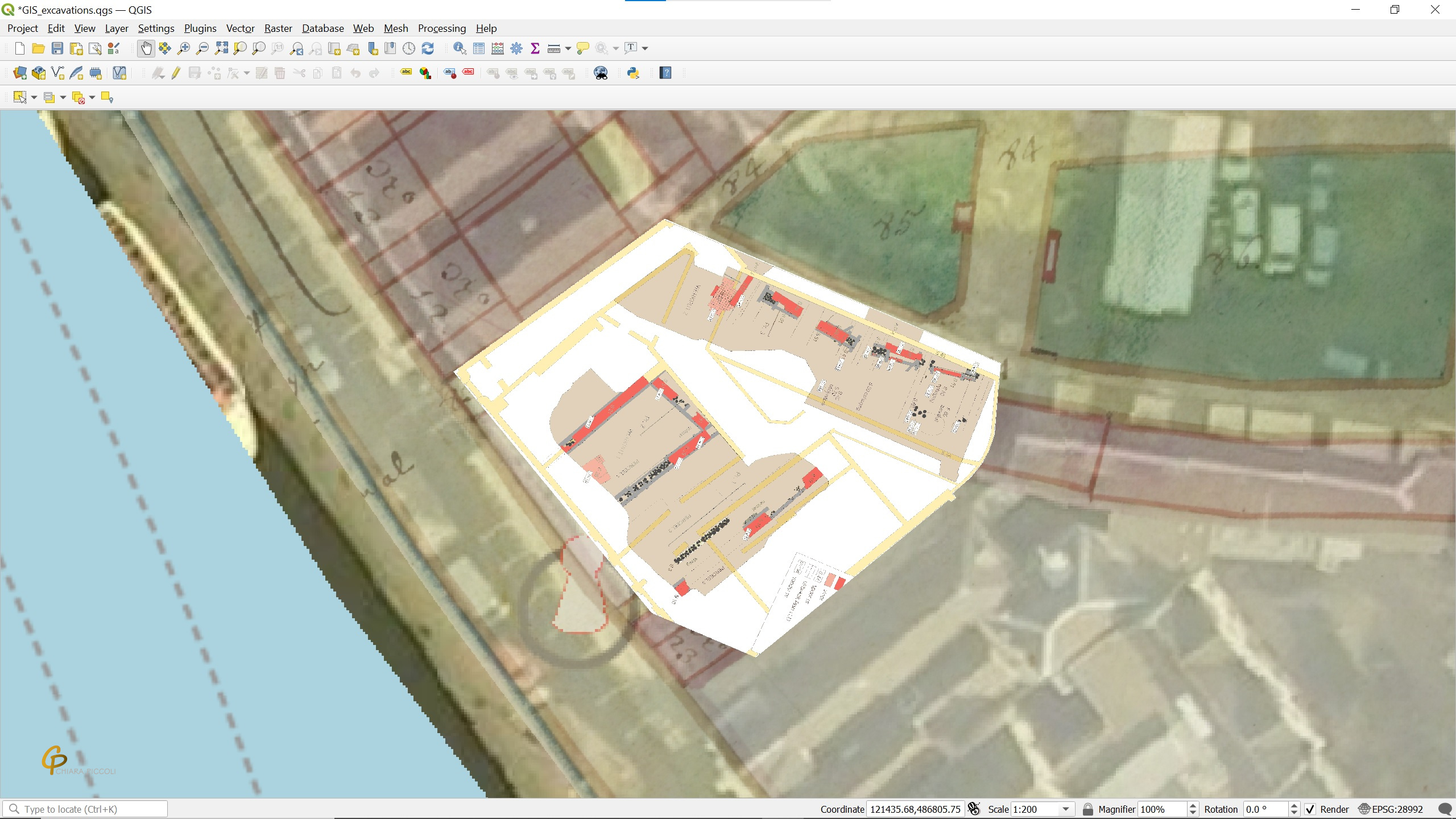
GIS mapping for locating Gillis van Coninxloo's house

Spatial mapping and 3D GIS workflows

Examples of GIS mapping of archival and archaeological data (above) to establish the location of the house of the painter Gillis van Coninxloo at the Oude Turfmarkt, Amsterdam; (below) workflow for the creation of a 3D GIS of architectural survey finds at Koroneia (read more in Piccoli 2018, pp. 229–32).

Workflow for creating a 3D GIS of survey finds at Koroneia
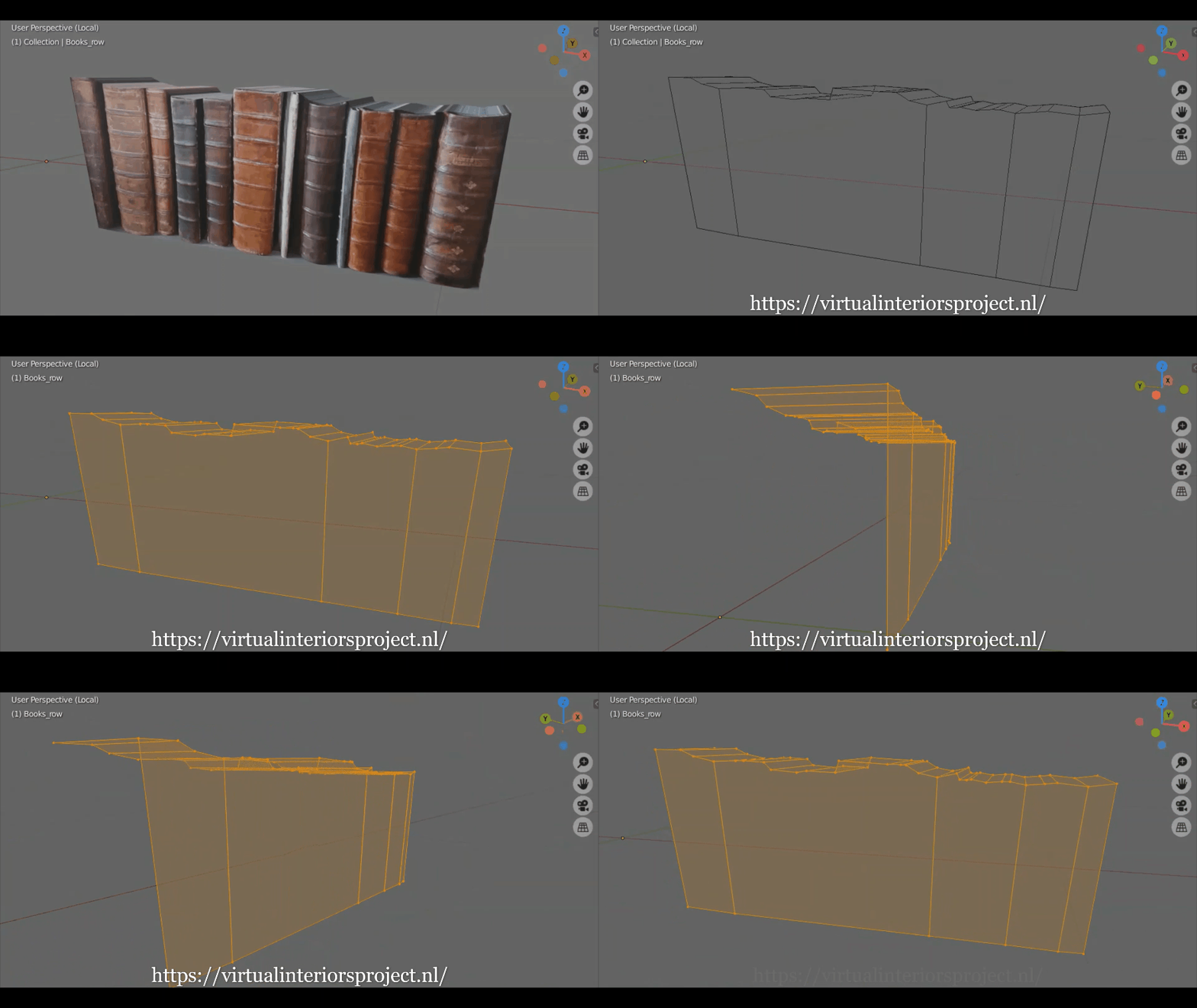
Low-poly modelling technique for books in De Graeff's home library

Low‑poly and SfM modelling techniques

One of the techniques that I used to model hundreds of books in De Graeff’s home library. In another cases, I rely on Structure from Motion to create highly detailed 3D models from photographs. This example was created with the Open Source software Meshroom: